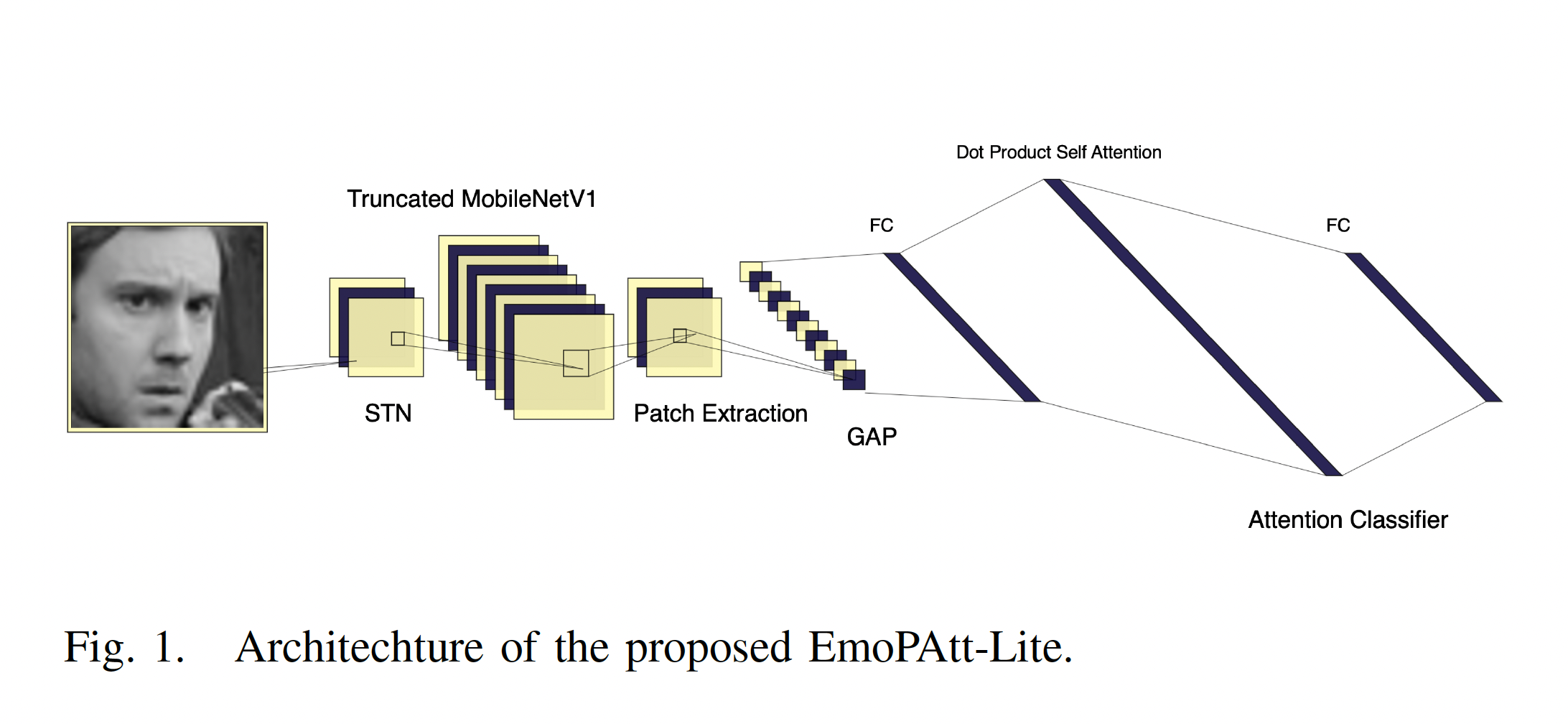
Facial expressions are a fundamental component of human communication, conveying a wide range of emotions. However, automatic facial expression recognition (FER) in the wild remains challenging, particularly under adverse conditions. Recent advances in computer vision have demonstrated the effectiveness of deep neural networks for FER, but their deployment is often constrained by the need for substantial computational resources. To address this, we propose EmoPAtt-Lite, a compact FER model that modifies MobileNetV1 by integrating spatial adaptation and channel-aware recalibration modules. Unlike prior patch-attention methods, our model emphasizes spatial alignment (via a Spatial Transformer Network) and channel weighting (via Squeeze-and-Excitation block) to enhance lightweight FER performance. Despite its compressed size of only 1.3M parameters, EmoPAtt-Lite achieves state-of-the-art performance on the FER2013 benchmark, reaching an accuracy of 79.35%, thus demonstrating that high recognition accuracy can be attained without heavy computational demands.
@inproceedings{benseddik2025emopattlite,title={EmoPAtt-Lite: Lightweight Facial Emotion Recognition},author={{Ben seddik}, Ismail and Adelekan, Adebowale Emmanuel},booktitle={International Conference on Information Technology and Applications (ICITA)},series={Lecture Notes in Networks and Systems},year={2025},publisher={Springer}}
Preprint
PODSAGE: Story-Driven AI for Enhanced Learning, Comprehension, and Retention
Cheng Wu Innovation Challenge at Indiana University
PODSAGE is an AI-driven educational storytelling platform that transforms complex concepts into engaging, interactive narratives. Using a fine-tuned LLaMA 3.3 model, PODSAGE produces multimodal stories with credible citations, adaptive personalization, and support for neurodivergent learners. Unique features include interactive narrative choices, personaaware delivery, and a community content studio. Evaluation combines human and LLMbased scoring. PODSAGE demonstrates a scalable, ethical approach to enhancing comprehension and retention through the science of storytelling.
@article{podsage,title={PODSAGE: Story-Driven AI for Enhanced Learning, Comprehension, and Retention},author={{Ben seddik}, Ismail},year={2025}}
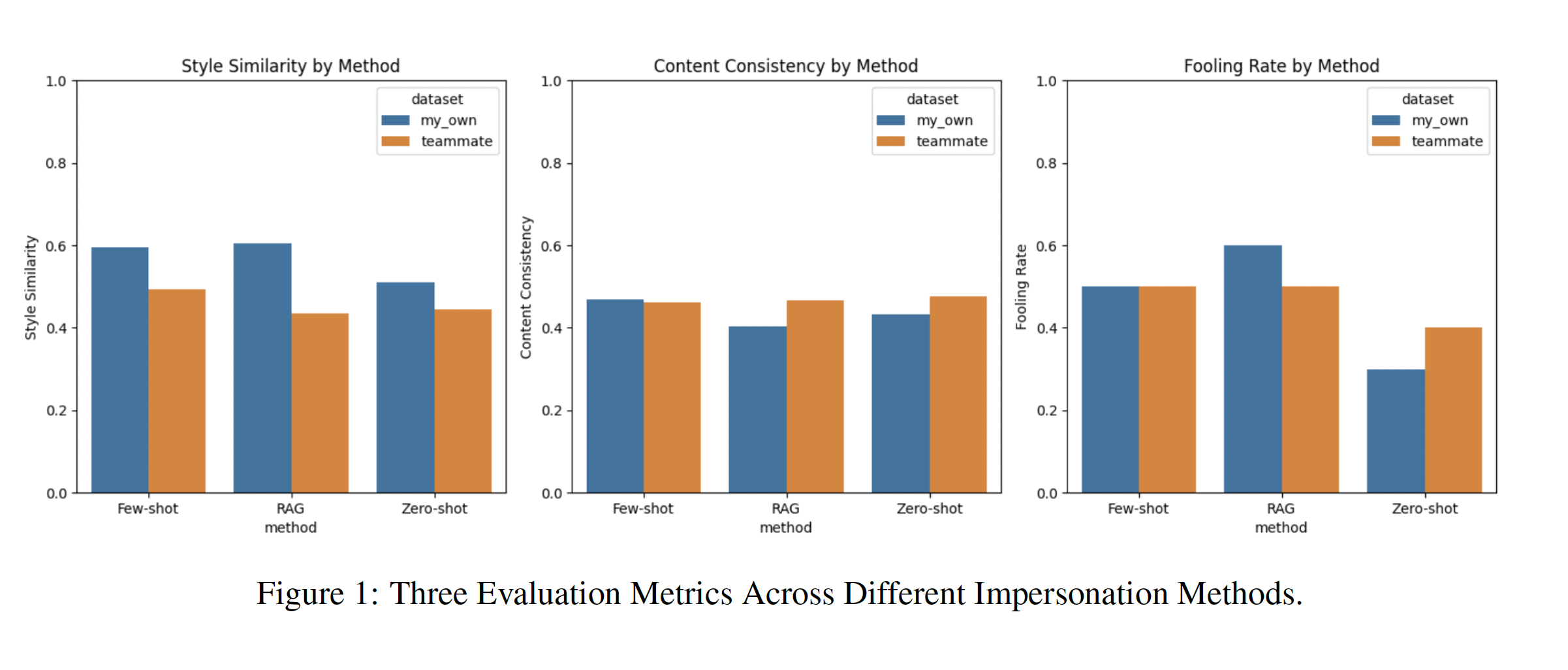
This work investigates impersonation capabilities of Large Language Models (LLMs). It examines how effectively LLMs can mimic an individual’s writing style and opinions based on limited examples of their responses. Using three distinct impersonation methods—zeroshot prompting, few-shot prompting, and retrieval-augmented generation—the performance is evaluated through automated metrics and LLM-based detection. The findings reveal concerning implications for digital identity security and highlight the need for robust detection mechanisms to mitigate impersonation risks in online communications.
@article{llmimpersonation,title={Human Impersonation Using Large Language Models},author={{Ben seddik}, Ismail},year={2025}}
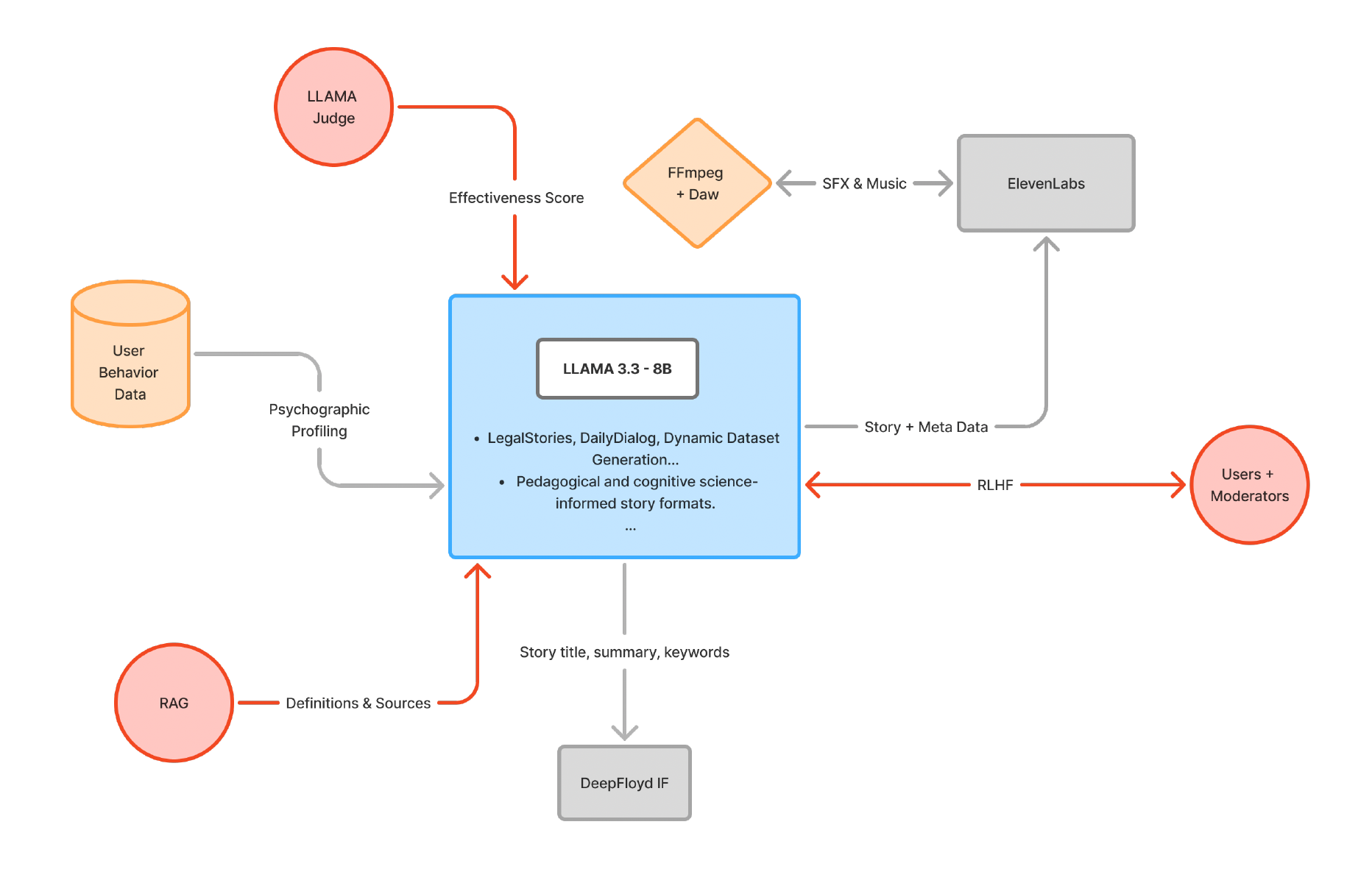 PODSAGE: Story-Driven AI for Enhanced Learning, Comprehension, and Retention2025